Understanding Vintage Christmas Digital Paper for Modern Creative Projects
In the realm of digital design and crafting, finding authentic textures that evoke a specific era can be challenging. Vintage Christmas Digital Paper offers a unique solution by bridging the gap between nostalgic aesthetics and modern technical requirements. This category of assets provides high-resolution, seamless patterns designed to replicate the look of aged stationery, classic wrapping paper, and traditional holiday decor without the physical limitations of sourcing actual materials.
For designers, scrapbookers, and DIY enthusiasts, these digital files serve as foundational elements for a wide array of projects. Unlike standard vector graphics or simple clip art, these papers provide complex backgrounds that add depth and atmosphere. The core value lies in their ability to transform a flat digital layout into something with tactile weight and historical charm, making them an essential resource for anyone looking to create content with a retro feel.
Distinguishing Features of High-Resolution Vintage Assets
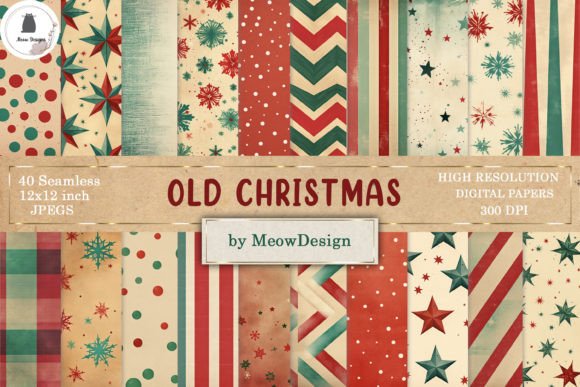
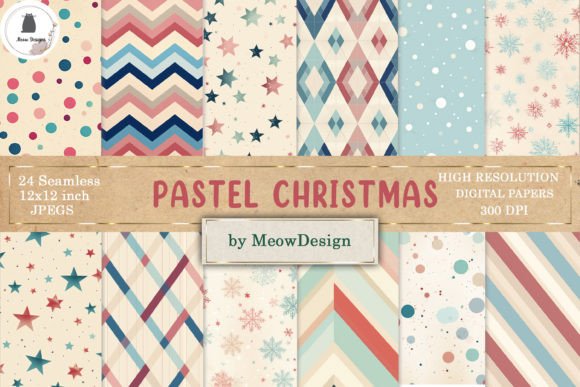
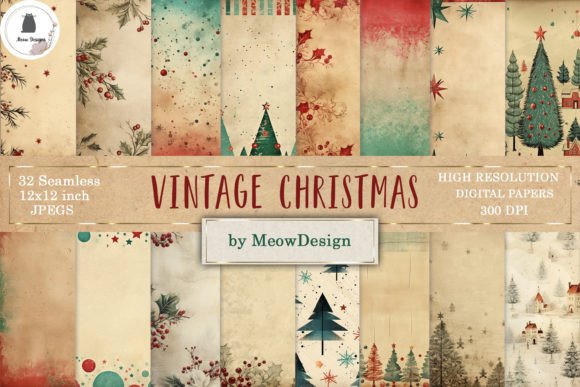
When evaluating different types of digital background resources, the quality of the file is often the deciding factor. A collection of Vintage Christmas Digital Paper typically distinguishes itself through specific technical specifications that ensure professional results. For instance, a standard offering often includes 32 distinct seamless patterns, each rendered at 12×12 inches with a resolution of 300 DPI.
This resolution is critical for print-on-demand services and physical crafting. Many lower-quality digital papers are created at 72 DPI, which appears crisp on a screen but becomes pixelated and blurry when printed. By adhering to the 300 DPI standard, these assets ensure that whether you are printing a greeting card, a planner sticker, or a book cover, the intricate details of the vintage texture remain sharp. Furthermore, the seamless nature of the pattern allows users to tile the image indefinitely, creating large backgrounds for website headers or wrapping paper designs without visible edges or breaks.
It is also important to note the format. These assets are delivered as JPG files, a universally compatible format that works seamlessly with most graphic design software, including Adobe Photoshop, Canva, GIMP, and Microsoft Word. While some competitors might offer proprietary formats that require specific applications, the use of standard JPGs ensures accessibility for all skill levels.
The Difference Between Digital and Physical Materials
A common point of confusion for new crafters is the distinction between purchasing physical vintage paper and downloading digital versions. Physical vintage paper is often fragile, yellowed with age, and difficult to source in consistent quantities. Sourcing authentic mid-century wrapping paper or aged cardstock can be time-consuming and expensive. Additionally, physical items incur shipping costs and delays.
Digital alternatives eliminate these logistical hurdles. When you acquire a set of Vintage Christmas Digital Paper, there is no waiting for delivery, no risk of damage during transit, and no waste from unused sheets. You receive the files instantly, allowing for immediate experimentation. However, this does not mean the digital version lacks the "feel" of the original. Through careful scanning and restoration, digital artists capture the grain, discoloration, and subtle imperfections that define the vintage aesthetic.
One tradeoff to consider is the tactile experience. While digital paper looks perfect on a screen and prints beautifully, it does not possess the physical thickness or texture of real paper unless you print it onto cardstock yourself. For purely digital layouts, such as blog posts or social media graphics, this is irrelevant. For those planning to create physical objects like handmade cards or journals, the workflow involves printing the digital file onto your chosen substrate, giving you full control over the final material choice.
Evaluating Use Cases and Application Scenarios
The versatility of these digital papers makes them suitable for a vast spectrum of creative endeavors. Understanding where they fit best helps users determine if they are the right tool for their specific project.
- Digital Scrapbooking and Layouts: For enthusiasts who document memories online or via desktop publishing software, these papers provide instant thematic backdrops. They eliminate the need to manually photograph or scan physical paper, saving significant time while maintaining a cohesive look across multiple pages.
- Web and Blog Design: Website owners seeking a warm, festive atmosphere can use these images as background textures. Their seamless nature allows them to stretch across full-width banners or sidebars without repeating awkwardly. Using a high-resolution vintage pattern can significantly enhance the visual hierarchy of a holiday-themed article or landing page.
- Printable Products and Stationery: This is perhaps the most popular application. Creators selling on marketplaces like Etsy often use these assets to produce invitations, birth announcements, tags, and place cards. The high resolution ensures that the final printed product meets professional standards, preventing the "fuzzy" look that plagues low-quality downloads.
- DIY Crafts and Home Decor: Beyond paper crafts, these images can be used for decoupage projects, decorating furniture, or designing custom packaging. By printing the digital paper on various surfaces, hobbyists can create matching sets of party supplies, gift boxes, or even decorated jewelry displays.
Comparing Approaches: Custom vs. Pre-Made Patterns
When considering how to achieve a vintage look, creators generally have two paths: creating the texture from scratch using design software or utilizing pre-made asset libraries. Creating a vintage effect manually involves layering noise filters, adjusting color curves, and adding grunge overlays. While this offers total customization, it requires advanced skills and considerable time investment.
Using a curated collection of Vintage Christmas Digital Paper offers a more efficient alternative. These collections are often designed by specialists who understand color theory and historical accuracy, ensuring that the reds are true to the era and the fonts (if included) match the style. For professionals working under tight deadlines, buying a pack of 32 patterns is often more cost-effective than spending hours designing textures from scratch.
However, there is a tradeoff regarding uniqueness. If every other designer uses the same popular pack, your project may lack a one-of-a-kind signature. To mitigate this, experienced creators often combine multiple packs or overlay additional elements, such as hand-drawn illustrations or custom typography, to differentiate their work. Conversely, for personal projects or small business ventures where speed and consistency are paramount, pre-made packs are usually the superior choice.
Navigating Limitations and Making Informed Choices
While the benefits of digital vintage paper are clear, potential buyers should be aware of certain limitations to manage expectations effectively. One primary consideration is the licensing and usage rights. Most digital products are sold as personal or commercial licenses, meaning the buyer cannot resell the raw image files themselves. Instead, the value is added by incorporating the paper into a larger design, such as a finished invitation or a printed book cover.
Another factor is the visual representation versus the final file. Listings often display low-resolution thumbnails to save bandwidth. It is crucial to understand that the downloaded files will be in full high resolution. Users should verify that the preview images accurately represent the color palette and texture complexity of the final download, as lighting on monitors can vary.
Furthermore, while the watermark seen in promotional images is a security measure, it is standard practice that it does not appear in the final purchased file. This ensures that the user receives a clean, usable product. However, buyers must ensure they are purchasing from reputable sources to avoid scams where watermarks persist in the download.
When to Choose Digital Over Alternatives
Deciding whether to invest in a set of Vintage Christmas Digital Paper depends largely on the end goal. If you are a professional graphic designer building a brand identity for a client's holiday campaign, the time saved by using high-quality, seamless patterns is invaluable. The ability to quickly swap between 32 different textures allows for rapid prototyping and iteration.
Similarly, for parents or teachers organizing school events, parties, or classroom decorations, these digital assets provide an affordable way to create professional-looking materials without the budget for custom printing services. The ability to print exactly what you need, when you need it, reduces waste and stress.
Conversely, if your project requires a highly specific, non-repeating texture that cannot be tiled, or if you need a physical object immediately without access to a printer, digital paper may not be the ideal solution. In such cases, visiting a local craft store or commissioning a custom artist might be more appropriate. However, for the vast majority of digital and hybrid projects, the flexibility, resolution, and variety offered by a comprehensive pack of Vintage Christmas Digital Paper make it a practical and powerful resource.
Ultimately, the decision comes down to balancing the desire for authenticity with the need for efficiency. By understanding the technical strengths of these assets and their broad range of applications, creators can leverage them to produce work that honors the past while embracing modern convenience.